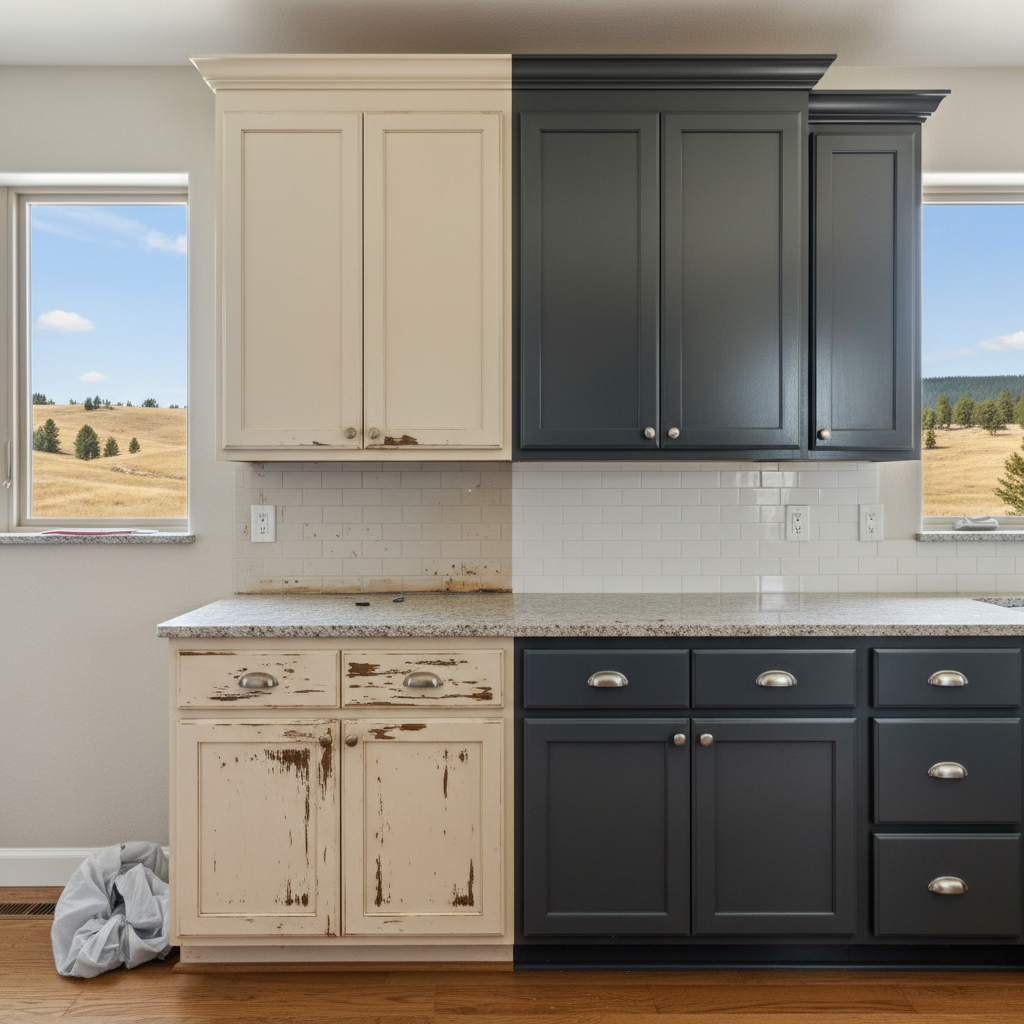
Alright, let's talk cabinets. You're probably looking to spruce up your kitchen, maybe give it a whole new vibe without tearing everything out. Painting those cabinets is a smart way to do it. But then you hit a snag, right? How do you actually get the paint on? Basically, you've got two main choices: spraying or brushing and rolling. Both have their moments, but for cabinets, especially here in Bozeman, one usually comes out on top.
The Sprayed Finish: Smooth Operator
When I talk about spraying cabinets, I'm not talking about some hardware store rattle can. No, this means using a professional-grade sprayer. This specialized gear turns the paint into a super fine mist, which then lays down a really smooth, factory-like finish. Think about how new cabinets look – that's the kind of finish you're aiming for when you spray.
Appearance
This is where spraying truly shines. You end up with an incredibly even, glass-smooth surface. No brush strokes, no little roller bumps, just pure, consistent color. It's the gold standard for that high-end, modern look. If you're chasing that sleek, contemporary kitchen feel, spraying is definitely your best bet.
Durability
A properly sprayed finish, especially if you use the right primer and topcoats (we're talking industrial-grade stuff, not just regular house paint), is super durable. Because the paint goes on in thin, even layers, it cures harder and more uniformly. It's less likely to chip or scratch than a hand-painted finish, which is a big deal in a busy kitchen, don't you think? You'll still need to be careful with your cabinets, but this method really holds up to daily wear and tear.
Cost
Here's the catch: spraying almost always costs more upfront. Why? Well, the prep work is way more involved. You've got to take off all the doors and drawer fronts, then either move them off-site to a special spray booth or set up a serious containment area right in your home. Then there's the masking. Every single surface that isn't getting paint has to be covered perfectly. Plus, the equipment itself is expensive, and it takes a skilled hand to use it right. You're paying for expertise and a better result, plain and simple.
Maintenance
Once it's all done, keeping it clean is pretty easy. Just wipe it down with a damp cloth, maybe a little mild soap if you need it. That smooth surface means dirt and grime don't have anywhere to hide, so cleaning becomes a breeze.
The Brush & Roll Finish: Classic Charm
Now, let's look at the brush and roll method. This is probably what most DIYers picture when they think about painting cabinets. You'll use good quality brushes for the detailed spots and a small foam roller for the flat surfaces.
Appearance
With brush and roll, you're going to see some texture. Even if you have the best technique, you'll still get slight brush strokes and a bit of roller stipple. Some folks actually prefer this look; it gives cabinets a handmade, artisanal feel, which can be fantastic for a more traditional or rustic style. It doesn't look