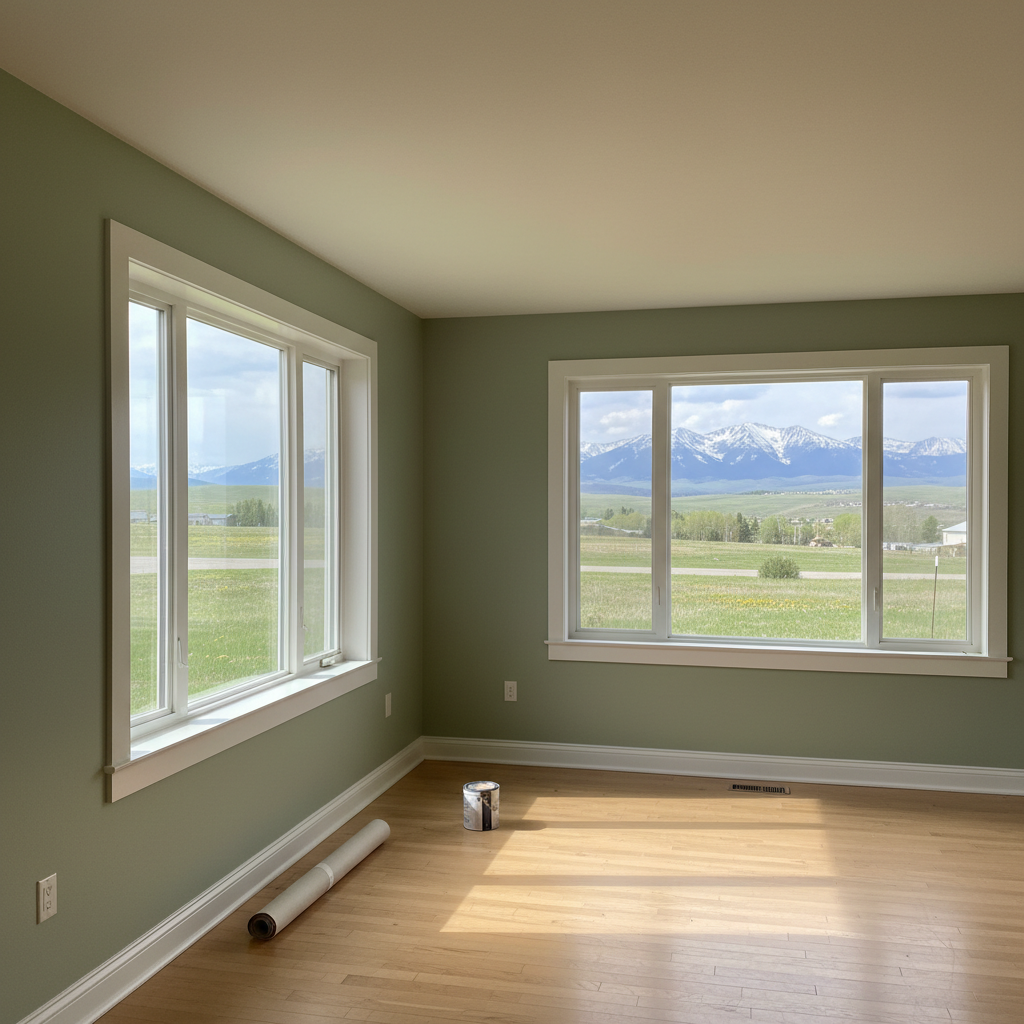
So, you're thinking about painting the inside of your house, huh? Maybe it's time for a refresh, or you just bought a place and want to make it truly yours. One of the first things people always ask me is, "What's this going to cost?" And look, I totally get it. Nobody wants to feel like they're getting ripped off, especially with how quickly prices seem to be climbing for everything around here in Bozeman.
I've been painting homes in Bozeman for years now, and I've seen all sorts of projects. We're talking everything from small bathrooms to full-on, whole-house transformations in spots like the Valley West neighborhood. While I can't give you an exact number without actually seeing your specific job, I can definitely give you a solid idea of what influences the price and what you should expect when you're getting quotes. It's not as simple as you might think.
What Makes Interior Painting Costs Go Up or Down?
It's not just about the square footage, though that's a big part of it, naturally. Several factors really push the price up or down. Think of it like building a custom home – you can get a basic model or you can add all the bells and whistles. Painting's pretty similar, actually.
- Surface Condition: This is huge. If your walls are pristine, just needing a fresh coat, that's one thing. But if they're full of nail holes, cracks, water stains, or have old wallpaper that needs stripping, that's going to add significant prep time. And prep work, frankly, is often where a lot of the labor cost comes in. We're talking patching, sanding, priming, and sometimes even texturing.
- Ceilings and Trim: Are you painting just the walls, or do the ceilings and trim (those baseboards, door frames, and window casings) need attention too? Painting trim is detailed work and takes more time per square foot than just rolling a flat wall. Ceilings can be tricky, especially if they're textured or super high.
- Number of Colors: More colors mean more cutting in, more tape lines, and more time. If you're doing one color throughout, it's generally more efficient than, say, doing an accent wall in every single room.
- Type of Paint: Quality matters, big time. A premium, low-VOC (volatile organic compound) paint from a brand like Sherwin-Williams or Benjamin Moore is going to cost more per gallon than some builder-grade stuff. But it'll also cover better, last longer, and often be more washable. For a typical 10x12 room, you might use 2-3 gallons, so the paint cost isn't usually the biggest factor, but it definitely adds up for a whole house.
- Accessibility: High ceilings, tricky stairwells, or rooms with a lot of built-ins or furniture that need to be moved and protected can easily increase labor time.
- Season: Believe it or not, demand can affect pricing. Here in Bozeman, spring and fall are often super busy, so you might find more competitive pricing during slower times, though those are rare these days, aren't they?
Typical Cost Ranges in Bozeman
Alright, let's get to some actual numbers. Again, these are just estimates, but they're based on what I see regularly. These prices usually include labor, paint, and materials like tape, plastic, and drop cloths.
- Small Room (e.g., Bathroom, Small Bedroom - 100-150 sq ft walls): For just walls, you're probably looking at $400 - $800. If you add ceilings and trim, it could easily jump up to $700 - $1,200. This assumes decent wall condition, mind you.
- Standard Bedroom (12x12 - 350-400 sq ft walls): Just walls, expect $700 - $1,200. With ceilings and trim, $1,000 - $1,800. Again, this is for a pretty standard job with minimal repairs.
- Living Room/Dining Room (Larger, Open Concept - 600-1000 sq ft walls): This can vary wildly based on ceiling height and architectural features. For walls only, you might see $1,200 - $2,500. Add ceilings, trim, and potentially a lot of prep, and you could be in the $2,000 - $4,500+ range.
- Whole Interior (2,000 sq ft home, walls, ceilings, trim): This is a big one. For a full repaint, assuming a typical 2-3 bedroom house with decent walls, you're generally looking at $6,000 - $12,000. If it's a new build with clean walls and no furniture, it might be on the lower end. If it's an older home needing a lot of love, or a larger luxury home, it could easily go higher.
These numbers are for professional painters who are licensed, insured, and paying their crew a fair wage. If you get a quote that's drastically lower than these ranges, be wary. You might be dealing with someone who isn't insured, cuts corners on prep, or uses cheap paint, and that's going to cost you more in the long run. Trust me on that.
What Should a Quote Include?
When you get a quote from a reputable company like Bozeman Painting Company, here's what you should expect to see detailed:
- Scope of Work: Clearly states what's being painted (walls, ceilings, trim, doors, closets, etc.) and in which rooms.
- Prep Work: Details like patching small holes, sanding, minor crack repair, and masking. Major repairs should be itemized separately.
- Number of Coats: Typically two coats of paint are applied over a properly primed surface.
- Paint Type and Brand: Specifies the exact paint product, sheen (flat, eggshell, satin, semi-gloss), and color.
- Timeline: An estimated start and completion date.
- Warranty: What kind of guarantee they offer on their work.
- Payment Schedule: Usually a deposit upfront, with the remainder due upon satisfactory completion.
- Insurance and Licensing: Confirmation that they are licensed and insured. Don't skip this part, ever.
How to Avoid Overpaying (and Underpaying!)
Getting multiple quotes is always a good idea. I recommend at least three. But don't just pick the cheapest one. Here's what I tell people to look out for:
- Compare Apples to Apples: Make sure each quote covers the exact same scope of work, paint quality, and level of prep. If one quote is significantly lower, it might be because they're planning to skip a coat of paint or cut corners on prep.
- Ask for References: A good painter will be happy to provide them. Call them! Ask about communication, cleanliness, and if the job was completed on time and within budget.
- Check Insurance: Ask for proof of liability insurance and workers' compensation. If a painter gets hurt on your property and they're not insured, you could be liable. It's a risk not worth taking.
- Trust Your Gut: Do they seem professional? Do they communicate clearly? Do they answer your questions thoroughly? You're inviting these people into your home, so you want to feel comfortable with them.
Painting your home's interior is an investment, and it can really transform a space. By understanding what goes into the cost and what to look for in a quote, you'll be much better equipped to make a smart decision and get a beautiful, long-lasting finish.